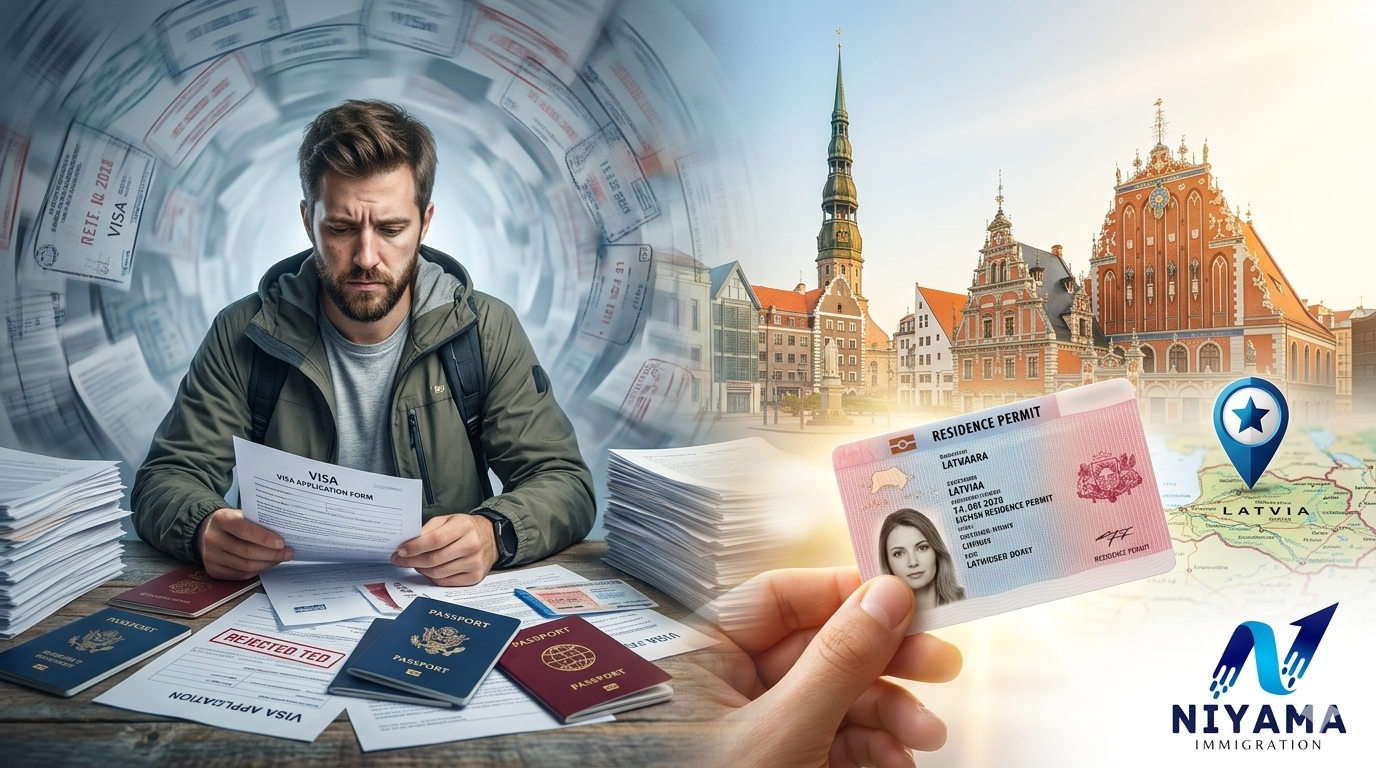
I Was Stuck in a Visa Loop for 2 years—Latvia Solved It in Just 6 Months
Summary Box
- I spent 2 years stuck in a visa loop, constantly counting Schengen days and living out of a suitcase.
- Latvia offered a realistic, fast, and affordable path to European residency.
- The startup visa and temporary residence permit options are surprisingly straightforward for remote workers.
- I got approved, moved, and settled in 6 months—after years of stress.
- Latvia isn’t the loudest or trendiest country, but sometimes the quietest option works the best.
“Two years of running from border to border made me crave one thing more than freedom: stability.”
What Is a Visa Loop (And Why It's More Exhausting Than It Sounds)
When people hear “visa loop,” they imagine some fun nomad lifestyle—traveling nonstop, switching countries every few months, living your best life.
Reality?
It’s a slow, exhausting countdown that controls every decision you make.
The Schengen 90/180 Rule Trap
My trouble started with the infamous Schengen 90/180 rule.
You can only stay 90 days within any 180-day period. Once you hit that limit, you're out—literally.
So for two years, my life looked like this:
- 90 days in Spain
- 90 days outside (usually Georgia, Turkey, or Serbia)
- Back again
- Out again
- Repeat… until you slowly lose your sanity
It wasn’t just inconvenient. It was suffocating.
I was always counting days, crossing borders, and refreshing visa calculators like it was a full-time job.
Every time I got comfortable somewhere, the calendar kicked me out again.
This is what being stuck in a visa loop really feels like.
The Emotional and Financial Toll
The emotional toll was heavier than the travel.
- Constant flight purchases
- Airbnb hopping
- Last-minute exits
- Pressure to pack up your life every 3 months
It drains your finances and your peace.
- I wanted stability, not another stamp in my passport.
- I wanted a home base.
- A place I didn’t have to leave because a timer said so.
That’s when Latvia entered the picture… but not in the way you’d expect.
Why I Was Skeptical About Latvia at First
If I’m being honest, Latvia wasn’t on my radar at all.
In fact, I was actively avoiding it.
What I Thought I Knew About Latvia
Here’s the embarrassing truth:
I thought Latvia was:
- too cold
- too small
- too unknown
- too “Eastern Europe” for expats
- too complicated for residency
Basically, I wrote it off without knowing anything.
What Actually Changed My Mind
Everything changed when another remote worker in Tbilisi told me:
“Latvia gives residency faster than Portugal and cheaper than Estonia. Look into it.”
So I did.
And what I discovered shocked me:
- Latvia has one of Europe’s most practical residency systems
- It accepts remote workers, freelancers, and online entrepreneurs
- It has startup visas that don’t require VC funding
- The documentation requirements are realistic
- Processing times are actually reasonable
For the first time, a country felt like it was designed for people like me.
The Latvia Residency Options That Actually Work for Remote Workers
Most European countries promise residency pathways for digital nomads.
Latvia actually delivers them.
Here are the options that truly matter:
Latvia’s Startup Visa
This is one of the most misunderstood residency pathways in Europe.
You do NOT need:
- a Silicon Valley-level pitch
- investors
- a huge team
- a million-euro bank balance
You simply need:
- a real, scalable business idea
- a plan
- basic documentation
- proof of funds
It gives up to 3 years of residency, renewable.
For online entrepreneurs, this route is gold.
Temporary Residence Permit for Remote Workers
If you’re a:
- freelancer
- IT professional
- remote employee
- consultant
- online service provider
…this might be the easiest path.
Requirements are lighter compared to other EU countries:
- proof of income
- employment or client contracts
- educational background or relevant experience
- clean record
- valid health insurance
This is the option I chose
What Documents You Actually Need
In reality, the list wasn’t scary:
- Passport
- Proof of income
- Remote job or freelance contracts
- Bank statements
- Health insurance
- Background check
- Application form
- Passport-sized photos
That’s it.
- No extreme financial requirements.
- No endless paperwork.
- No unrealistic expectations.
My 6-Month Latvia Timeline (Month-by-Month Breakdown)
Here’s the exact timeline that ended my 2-year visa loop.
Month 1–2: Research and Application
I spent these first months:
- researching Latvia residency
- choosing the remote worker route
- preparing documents
- getting my background check
- purchasing insurance
- submitting the application
It was shockingly manageable.
The migration officers were straightforward and helpful—something I wasn’t used to after years of chaotic visa hopping.
Month 3–4: Approval, Arrival, and First Impressions
When the approval email came, I checked it three times to make sure I wasn’t hallucinating.
I packed my bags and flew to Riga.
First impressions:
- Quiet but safe
- Modern but not overwhelming
- Affordable but good quality
- English widely spoken
- Transportation system surprisingly efficient
It wasn’t flashy.
But it felt calm—and for someone coming out of a chaotic visa loop, calm felt revolutionary.
Month 5–6: Settled, Legal, and Actually Happy
By month five:
- I opened a bank account
- Got my residence card
- Found a long-term apartment
- Joined coworking spaces
- Built friendships
- Found a routine
And the biggest shift?
For the first time in years, I stopped counting days.
- The fear that a border guard could end my plans? Gone.
- The constant moving? Gone.
- The stress of overstaying? Gone.
- I finally felt human again.
Latvia vs. Other Popular Expat Destinations
Let’s be transparent—Latvia isn’t the only option for remote workers
But it’s one of the few options that actually works without drama.
Here’s how it compares:
Comparison Table: Latvia vs Portugal vs Georgia vs Estonia
| Feature | Latvia | Portugal | Georgia | Estonia |
|---|---|---|---|---|
| Residency Processing | Fast (2–6 months) | Slow (6–18 months) | Very easy | Moderate |
| Cost of Living | Low | High | Very low | Moderate–high |
| Digital Nomad Visa | Yes | Yes | Not required | Yes |
| Startup Visa | Easy | Difficult | Not needed | Complex |
| Safety | High | High | Medium | High |
| Internet Speed | Fast | Fast | Moderate | Fast |
| Best For | Remote workers needing stability | Lifestyle seekers | Budget nomads | Tech professionals |
Latvia vs. Portugal
Portugal is beautiful but slow.
Its digital nomad visa and D7 processes often drag on for months or years.
Latvia gives faster approvals, cheaper living, and fewer bureaucratic headaches.
Latvia vs. Georgia
Georgia is easy to enter, but long-term residency is becoming more complicated.
Plus
- healthcare is weaker
- safety varies
- income requirements are rising
Latvia offers more stability and stronger systems.
Latvia vs. Estonia
Estonia is more tech-forward, but:
- higher costs
- stricter requirements
- more competition
Latvia is more accessible with similar digital infrastructure.
What Life Is Actually Like in Riga as an Expat
Your life isn’t just paperwork.
It’s your daily routine.
Here’s mine:
Cost of Living Breakdown
Monthly average costs:
- Rent (center): €450–€650
- Groceries: €150–€200
- Coworking: €120–€150
- Transport pass: €30
- Cafes: €2–€3 for coffee
Overall, Latvia cost of living is one of Europe’s best for remote workers.
Internet, Coworking, and Remote Work Infrastructure
This is where Latvia shines:
- 1GBPS+ internet widely available
- Modern coworking spaces
- Tech-friendly culture
- Reliable public transport
If you work remotely, Riga is a quiet productivity paradise.
Community, Culture, and Loneliness (The Honest Truth)
Now the real talk.
Latvians are reserved.
Building friendships takes time.
But when they open up, the connections are real.
Expats here tend to be:
- focused
- career-driven
- intentional
Does it get lonely sometimes?
Sure. But no more than in any other digital nomad hub.
And you’re surrounded by nature, quiet cafés, and a slower pace of life—something I desperately needed after two chaotic years.
Is Latvia the Right Move for You?
The country isn’t for everyone, and that’s okay.
Who Should Seriously Consider Latvia
Latvia is ideal if you are:
- a digital nomad tired of visas
- a remote worker wanting security
- a freelancer needing EU residency
- someone seeking affordability + stability
- done with the Schengen 90/180 rule stress
Who It Might Not Be For
Latvia might NOT fit you if:
- you want hot weather year-round
- you need a huge nightlife scene
- you prefer big expat communities
- you want a highly touristy environment
Latvia is for people who want peace, not parties.
Final Thoughts — Sometimes the Underdog Country Wins
If someone had told me two years ago that Latvia—a country I barely thought about—would solve my 2-year visa nightmare, I would’ve laughed.
But here I am.
- A remote worker.
- Legally settled.
- Not counting days.
- Not running from borders
- Simply… living.
Sometimes the quietest countries give you the loudest peace.
FAQs: Study Abroad Scams in India
Look for countries offering realistic residency options like Latvia’s startup visa or remote worker permit. These provide long-term stability.
Yes. It offers affordable living, strong internet, and residency paths suited for freelancers and remote workers.
Most applicants receive answers within 2–6 months depending on documentation and workload.
It varies by permit type but is generally more flexible than other EU nations.
Yes. Once you have a temporary residence permit, you can live in Latvia long-term and travel freely within the Schengen area.
Quick Facts About Latvia Residency
- Processing time: 2–6 months
- Ideal for: Remote workers, freelancers, startup founders
- Cost of living: Low compared to Western Europe
- Residency length: 1–3 years depending on permit
- Key advantage: Freedom from the Schengen 90/180 rule
- Difficulty: Surprisingly moderate
- Daily life: Safe, calm, tech-friendly
Ready to End Your Own Visa Loop?
If this story helped you, drop a comment below or subscribe for more real-world immigration insights.
Your future home might be a country you never expected—just like mine.